Understanding 2026 Medicare Part D Options for Seniors

Navigating 2026 Medicare Part D options is crucial for seniors to find optimal prescription drug coverage, with plans varying significantly in costs, benefits, and formulary coverage to meet diverse healthcare needs.
For many seniors, Understanding Your 2026 Medicare Part D Options: A Comparison of Costs and Benefits for Seniors is not just a financial decision, but a cornerstone of their health and well-being. As we approach 2026, it’s essential to dissect the nuances of these plans to ensure you’re making the most informed choice for your prescription drug needs. This guide aims to simplify the complexities, helping you navigate the landscape of deductibles, copayments, and formularies with confidence.
The Basics of Medicare Part D in 2026
Medicare Part D, established to help beneficiaries cover the costs of prescription drugs, continues to evolve. For 2026, understanding its foundational structure is the first step in making an informed decision. These plans are offered by private insurance companies approved by Medicare, and their offerings can differ significantly from one provider to another, and even from one region to another.
Each Part D plan has a formulary, which is a list of covered drugs. It’s crucial to check if your current medications are on a plan’s formulary and at what cost-sharing tier they fall. Plans typically categorize drugs into tiers, with generic drugs usually in lower, less expensive tiers, and specialty drugs in higher, more costly ones. This tiered system directly impacts your out-of-pocket expenses throughout the year.
Enrollment periods and late enrollment penalties
It’s vital to enroll in a Medicare Part D plan when you are first eligible to avoid potential late enrollment penalties. If you don’t join a Part D plan when you’re initially eligible and don’t have other credible prescription drug coverage, you might face a penalty when you do enroll later. This penalty is permanent and added to your monthly premium.
- Initial Enrollment Period: Generally, this is a seven-month period that begins three months before you turn 65, includes the month you turn 65, and ends three months after you turn 65.
- Annual Enrollment Period (AEP): From October 15 to December 7 each year, you can join, switch, or drop a Medicare Part D plan. Any changes made during this time become effective on January 1 of the following year.
- Special Enrollment Periods (SEPs): Certain life events, such as moving or losing other coverage, may qualify you for a Special Enrollment Period to make changes to your Part D coverage.
Understanding these enrollment periods is critical to ensuring continuous coverage and avoiding unnecessary penalties. The rules are strict, and missing a deadline can have long-term financial implications for your healthcare costs.
In essence, Medicare Part D in 2026 will continue its role in providing prescription drug coverage, but with the responsibility falling on beneficiaries to actively compare and choose plans. Staying informed about enrollment windows and plan specifics is paramount for optimizing your benefits.
Comparing Plan Costs: Premiums, Deductibles, and Copayments
When evaluating 2026 Medicare Part D options, the financial aspects are often the most complex, yet critical, components to understand. These plans involve several types of costs: monthly premiums, annual deductibles, and various forms of cost-sharing like copayments and coinsurance. Each element plays a significant role in your overall out-of-pocket expenses.
Monthly premiums are the regular payments you make to the insurance company for your Part D coverage. These can vary widely among plans, even within the same region. A lower premium might seem attractive, but it could come with a higher deductible or higher copayments for your medications. Conversely, a higher premium often means lower out-of-pocket costs at the pharmacy.
Deductibles and cost-sharing structures
The deductible is the amount you must pay for your prescriptions before your plan starts to pay. For 2026, Medicare sets a maximum deductible, but many plans offer a lower deductible, or even a $0 deductible, especially for generic drugs. After meeting your deductible, you enter the initial coverage phase, where you pay a copayment (a fixed amount) or coinsurance (a percentage of the drug cost) for your prescriptions.
- Tiered Copayments: Most plans use a tiered system, where generic drugs have the lowest copayments, preferred brand-name drugs have higher copayments, and non-preferred brand-name and specialty drugs have the highest copayments or coinsurance.
- Coinsurance: For higher-tier drugs, you might pay a percentage of the drug’s cost instead of a fixed copayment. This can be significant for expensive medications.
- Formulary Impact: The specific drugs on a plan’s formulary and their assigned tiers directly influence your cost-sharing for those medications. It’s crucial to verify your specific prescriptions.
It’s important to analyze your typical medication usage and costs when comparing plans. A plan with a low premium but high deductibles and copayments might be more expensive in the long run if you take several costly medications. Conversely, a plan with a higher premium but lower cost-sharing could save you money if you have significant prescription needs.
Ultimately, a thorough comparison of premiums, deductibles, and copayments against your anticipated prescription drug needs is essential to project your total out-of-pocket expenses for 2026. Don’t just look at the premium; consider the entire cost structure.
Understanding Formularies and Drug Coverage
The formulary is perhaps the most critical component of any Medicare Part D plan, as it dictates which prescription drugs are covered and at what cost. For seniors, ensuring that their current and anticipated medications are included in a plan’s formulary is non-negotiable. A plan might seem affordable based on its premium, but if it doesn’t cover your essential drugs, or places them in a high-cost tier, it could end up being very expensive.
Formularies are dynamic and can change annually, so even if you’re happy with your current plan, it’s wise to review its 2026 formulary. Insurance companies must follow certain rules, such as covering at least two drugs in most therapeutic categories, but they have flexibility in which specific drugs they choose. This is why comparing formularies across different plans is so important.
Formulary tiers and restrictions
Most formularies are organized into tiers, with each tier having a different cost-sharing amount. Understanding these tiers is key to predicting your out-of-pocket costs:
- Tier 1: Preferred Generics: Lowest copayment, typically for common generic drugs.
- Tier 2: Generics: Slightly higher copayment than preferred generics.
- Tier 3: Preferred Brands: Medium copayment, for preferred brand-name drugs.
- Tier 4: Non-Preferred Brands: Higher copayment or coinsurance, for brand-name drugs not on the preferred list.
- Tier 5: Specialty Drugs: Highest copayment or coinsurance, for very expensive medications.
Beyond tiers, plans may also impose restrictions on certain drugs. These can include prior authorization (requiring approval from the plan before coverage), step therapy (requiring you to try a less expensive drug first), or quantity limits (restricting the amount of medication you can get at one time). These restrictions are designed to control costs but can be inconvenient for beneficiaries.
When comparing 2026 Medicare Part D options, always use the plan’s formulary search tool on their website or Medicare.gov to check your specific medications. Pay attention to the tier your drugs fall into, and look for any restrictions that might affect your access or cost. A thorough review of the formulary can prevent unexpected expenses and ensure continuity of your treatment.
Navigating the Coverage Gap (Donut Hole) in 2026
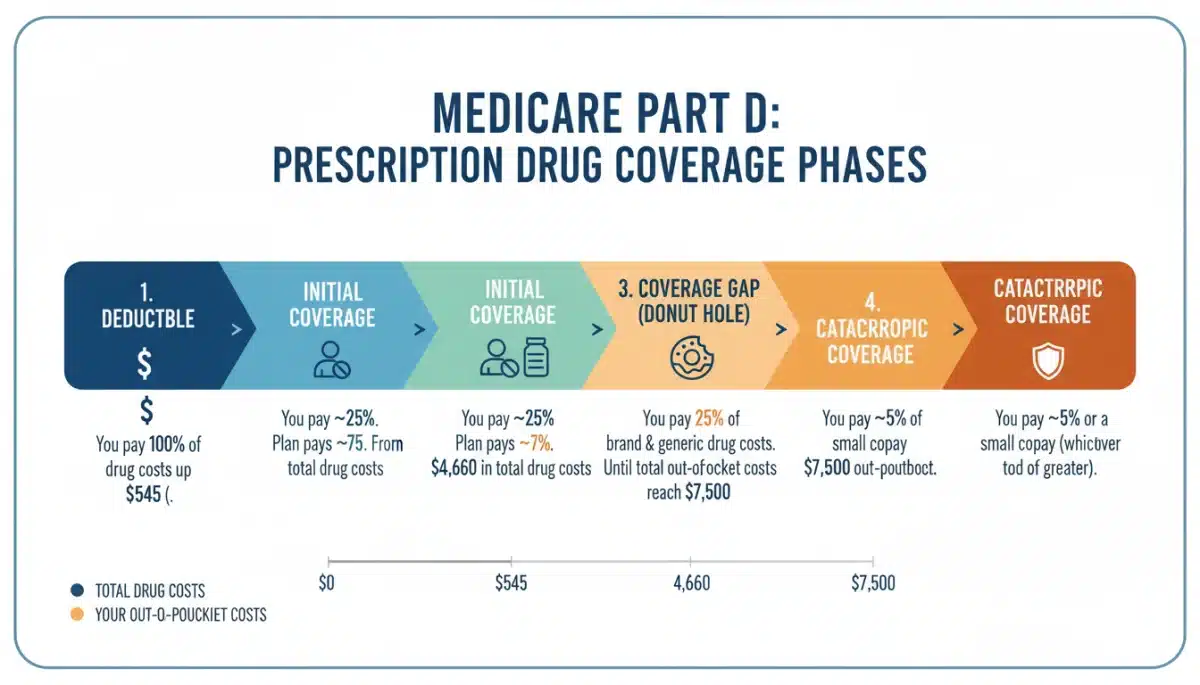
The coverage gap, often referred to as the “donut hole,” has historically been a source of confusion and financial burden for many Medicare Part D beneficiaries. While the Affordable Care Act has significantly reduced the impact of the donut hole, it’s still an important phase to understand when evaluating your 2026 Medicare Part D options.
In 2026, once you and your plan have spent a certain amount on covered drugs (the initial coverage limit), you enter the coverage gap. During this phase, you are responsible for a higher percentage of your drug costs. However, due to legislative changes, your out-of-pocket costs in the donut hole are now capped. For brand-name drugs, you’ll pay 25% of the cost, and the manufacturer pays 70% as a discount, with the plan paying 5%. For generic drugs, you’ll pay 25% of the cost, and the plan pays the remaining 75%.
Reaching catastrophic coverage
The good news is that the coverage gap isn’t endless. Once your out-of-pocket spending (including what you paid in the deductible, copayments, and coinsurance, plus the manufacturer discounts in the donut hole) reaches a certain threshold, you exit the coverage gap and enter the catastrophic coverage phase. For 2026, this threshold is expected to be adjusted, so it’s crucial to check the most up-to-date figures.
- Out-of-Pocket Threshold: This is the total amount you must spend on covered drugs before entering catastrophic coverage. It includes your deductible, copayments/coinsurance, and what you pay in the coverage gap.
- Catastrophic Coverage Benefits: Once you reach this phase, your costs are significantly reduced. You typically pay a very small copayment or coinsurance for your remaining covered prescription drug costs for the rest of the year.
While the donut hole is less impactful than it once was, it’s still a period where your out-of-pocket costs can increase. Understanding the initial coverage limit and the catastrophic coverage threshold for 2026 will help you budget and manage your prescription expenses. Some plans offer additional gap coverage for certain drugs, which can be a valuable benefit if you anticipate high drug costs.
Familiarizing yourself with how the coverage gap works in 2026 is a critical step in fully understanding the financial implications of your chosen Medicare Part D plan and avoiding any surprises in your prescription drug spending.
Extra Help and Low-Income Subsidies
For seniors with limited income and resources, navigating the costs associated with Medicare Part D can still be challenging, even with the improvements to the coverage gap. Fortunately, the Medicare program offers “Extra Help,” also known as the Low-Income Subsidy (LIS), to assist eligible individuals with their Part D costs. This program can significantly reduce premiums, deductibles, and copayments.
Extra Help is a federal program that helps pay for some of the costs of Medicare prescription drug coverage. This includes monthly premiums, annual deductibles, and prescription copayments. The amount of help you receive depends on your income and resources. Many people qualify for Extra Help and don’t even realize it, missing out on substantial financial assistance.
Eligibility and application process
Eligibility for Extra Help is determined by the Social Security Administration (SSA). Generally, you may qualify if your income and resources are below certain limits. These limits are updated annually, so it’s important to check the most current figures for 2026. Resources include things like money in a checking or savings account, stocks, and bonds, but do not include your home, car, or personal possessions.
- Income Limits: Your annual income must be below a certain threshold, which varies based on your household size.
- Resource Limits: Your countable resources must also be below a specific limit.
- Automatic Qualification: If you receive certain other benefits, like Medicaid, Supplemental Security Income (SSI), or help from your state to pay your Medicare premiums, you will automatically qualify for Extra Help.
If you believe you might qualify, you can apply for Extra Help at any time through the Social Security Administration’s website or by calling them directly. The application process is straightforward, and the benefits can be substantial. Even if you’re not sure you qualify, it’s worth applying, as many people underestimate their eligibility.
Receiving Extra Help can make a significant difference in the affordability of your 2026 Medicare Part D plan, making essential prescription drugs much more accessible. It’s a crucial resource for those facing financial constraints, ensuring that cost doesn’t become a barrier to necessary medication.
Tips for Choosing the Best 2026 Medicare Part D Plan
Selecting the optimal Medicare Part D plan for 2026 requires careful consideration and a personalized approach. With numerous plans available, each with its own set of premiums, deductibles, formularies, and cost-sharing structures, making the right choice can feel overwhelming. However, by following a systematic approach, you can narrow down your options and find a plan that best fits your needs and budget.
The first and most important tip is to review your current medication list. Compile a comprehensive list of all prescription drugs you take, including dosages and frequency. This list will be your most valuable tool when comparing formularies across different plans. Without it, you’re essentially guessing whether a plan will cover your essential medications.
Personalized plan comparison and annual review
Medicare.gov’s Plan Finder tool is an invaluable resource for comparing 2026 Medicare Part D options. This tool allows you to enter your specific medications and preferred pharmacies, then provides a personalized estimate of your total annual out-of-pocket costs for each plan available in your area. This includes premiums, deductibles, and estimated drug costs, giving you a clear picture of what to expect.
- Check Formularies: Ensure all your medications are covered and note their tier levels. Look for any prior authorization, step therapy, or quantity limit requirements.
- Compare Total Costs: Don’t just look at the premium. Consider the estimated annual cost, which includes premiums, deductibles, and copayments/coinsurance based on your drug list.
- Pharmacy Network: Verify that your preferred pharmacies are in the plan’s network. Out-of-network pharmacies can result in higher costs.
- Star Ratings: Medicare assigns Star Ratings to plans, reflecting their quality and performance. While not the only factor, a higher rating can indicate better service and member satisfaction.
Even if you are satisfied with your current plan, it’s highly recommended to review your options annually during the Annual Enrollment Period (AEP). Plans can change their formularies, premiums, and cost-sharing structures from year to year. Your own medication needs might also change. An annual review ensures you continue to have the most cost-effective and comprehensive coverage.
By taking the time to research, compare, and personalize your plan selection, you can confidently choose a 2026 Medicare Part D option that provides the best value and coverage for your unique healthcare situation, ensuring peace of mind regarding your prescription drug costs.
Future Outlook and Anticipated Changes for 2026
The landscape of Medicare Part D is continually evolving, with legislative changes and market dynamics shaping its future. For 2026, several key changes are anticipated that will further impact beneficiaries, particularly regarding out-of-pocket spending limits and the structure of drug costs. Staying informed about these developments is crucial for seniors planning their healthcare budget.
One of the most significant changes expected for 2026 is the implementation of a $2,000 cap on out-of-pocket prescription drug costs for Part D beneficiaries. This cap is a direct result of recent legislation and is designed to provide substantial financial relief to individuals with high prescription drug expenses. This means that once your out-of-pocket spending reaches $2,000 in a calendar year, you will pay nothing for covered prescription drugs for the remainder of the year.
Impact of the $2,000 out-of-pocket cap
This $2,000 cap is a game-changer, especially for those who frequently hit the catastrophic coverage phase or spend heavily on specialty medications. It provides a clear maximum limit on how much you will personally spend on prescription drugs annually, making budgeting much more predictable. Previously, even in the catastrophic phase, beneficiaries still had a small copayment or coinsurance.
- Increased Predictability: Seniors will have a clearer understanding of their maximum annual drug expenses, aiding in financial planning.
- Reduced Financial Burden: Individuals with chronic conditions requiring expensive medications will see significant savings.
- Potential Premium Adjustments: While the cap offers savings, it’s possible that plan premiums might see adjustments to absorb some of the costs, though the overall benefit for high-cost users is expected to outweigh this.
Beyond the out-of-pocket cap, ongoing efforts to negotiate drug prices and promote generic drug use may also influence Part D plans in 2026. These initiatives aim to lower the overall cost of prescription drugs, which could translate into lower premiums or reduced cost-sharing for beneficiaries in the long term. However, the exact impact will depend on the specific implementation and market responses.
As 2026 approaches, it will be essential to monitor official announcements from Medicare and your chosen Part D plan for the precise details of these changes. Understanding these anticipated shifts will empower you to make even more informed decisions when comparing and selecting your Medicare Part D coverage, ensuring you leverage all available benefits and protections.
| Key Aspect | Description for 2026 |
|---|---|
| Out-of-Pocket Cap | A new $2,000 annual limit on prescription drug costs for beneficiaries. |
| Formulary Review | Crucial to check if your specific medications are covered and their cost tiers. |
| Extra Help (LIS) | Assistance available for low-income seniors to reduce Part D premiums and costs. |
| Annual Enrollment | Utilize the AEP (Oct 15-Dec 7) to compare and switch plans for the coming year. |
Frequently Asked Questions About 2026 Medicare Part D
The most significant change for 2026 Medicare Part D is the implementation of a $2,000 annual out-of-pocket cap on prescription drug costs. This means once you spend $2,000 on covered medications, you will pay nothing for the rest of the year, offering substantial financial relief to beneficiaries with high drug expenses.
You can effectively compare 2026 Medicare Part D plans using the Medicare.gov Plan Finder tool. This resource allows you to input your specific medications and preferred pharmacies to receive personalized cost estimates, including premiums, deductibles, and projected annual drug expenses for various plans in your service area.
While the coverage gap, or “donut hole,” will technically still exist in 2026, its impact is greatly reduced. Beneficiaries will pay no more than 25% for covered brand-name and generic drugs in this phase, and the new $2,000 out-of-pocket cap will further limit financial exposure, essentially eliminating significant burdens.
“Extra Help,” or the Low-Income Subsidy (LIS), is a federal program designed to help seniors with limited income and resources pay for their Medicare Part D premiums, deductibles, and copayments. Eligibility is determined by the Social Security Administration, and qualifying can significantly reduce your out-of-pocket prescription drug costs.
It is strongly recommended to review your Medicare Part D plan annually during the Annual Enrollment Period (October 15 to December 7). Plans can change their formularies, premiums, and cost-sharing each year, and your own medication needs may also evolve, making an annual comparison crucial for optimal coverage and savings.
Conclusion
Understanding Your 2026 Medicare Part D Options: A Comparison of Costs and Benefits for Seniors is more than just an annual task; it’s a critical component of proactive health management. The forthcoming changes, particularly the $2,000 out-of-pocket cap, promise significant relief for many, yet the responsibility remains on individuals to thoroughly compare plans. By focusing on formularies, understanding cost structures, leveraging available assistance like Extra Help, and utilizing resources like Medicare.gov’s Plan Finder, seniors can confidently navigate the complexities of Part D. An informed decision ensures not only financial predictability but also consistent access to essential medications, contributing to overall well-being in the years to come.